Inside the Dion's Pizza Cookbook
Dough first, then the world's regional styles — a working collection built to be cooked from, not shelved.
Dough fundamentals
Regional styles
Weeknight pies
Weekend projects
This page is for the decision: is the Dion's Pizza cookbook the right one for your kitchen? Below is how the book is organized, what the recipes ask of you, and who tends to get the most out of it. No marketing fog, just the structure and the range.
You can read it cover to cover, or pull one style and work backward into the dough chapter. Both routes are how people actually cook from it. If you want the style list before anything else, the recipe collection lays out every pie the book covers.
How the book is organized
The cookbook opens with dough and equipment before it gets to any regional style. That order is deliberate. You learn what flour does, how hydration changes a crust, and how a stone or steel behaves before you commit to a specific pie.
After the fundamentals come the styles, grouped by region, then a closing set of recipes for entertaining and for using up dough you already have. Each chapter stands on its own, so you can jump to Detroit without reading Naples first. Read the sequence once and the cross-references inside later chapters make more sense; skip around and the recipes still hold together on their own.
See also: the dough and baking basics page if you want a taste of the teaching before you buy.
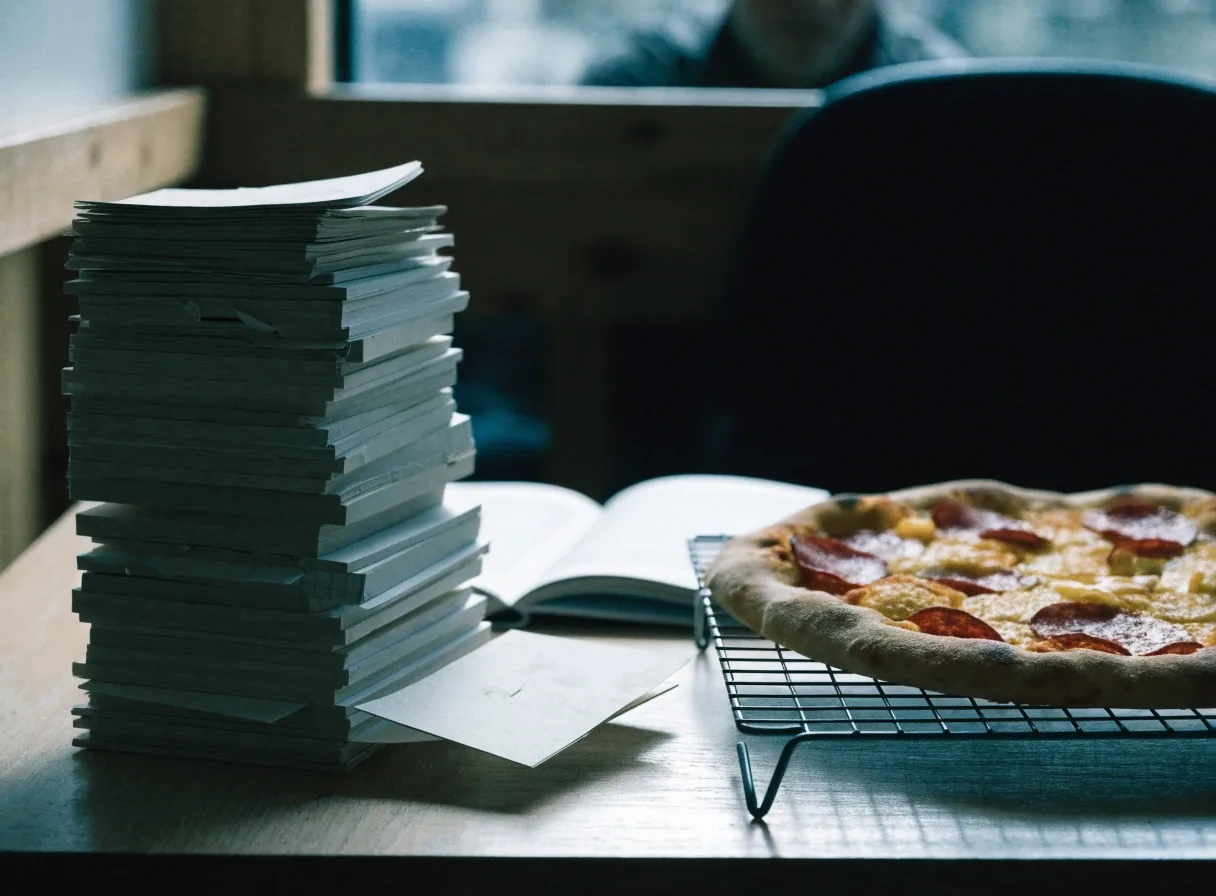
The order the chapters run
- Dough and equipment first
- Regional styles, grouped by region
- Entertaining and leftover-dough recipes
The dough chapters
These cover fermentation timelines, pre-ferments like poolish and biga, sourdough starters, and the difference between a same-day dough and a cold-fermented one. Measurements are given by weight, which is what makes a recipe repeatable.
There is a short troubleshooting section for the usual problems: dough that tears, dough that will not stretch, crust that stays pale. If you only read one part of the book, read this one. The fermentation chapters are also the part bread bakers tend to find familiar — same ideas, applied to a round instead of a loaf.
See also: the dough and baking basics page for a sample of the teaching.
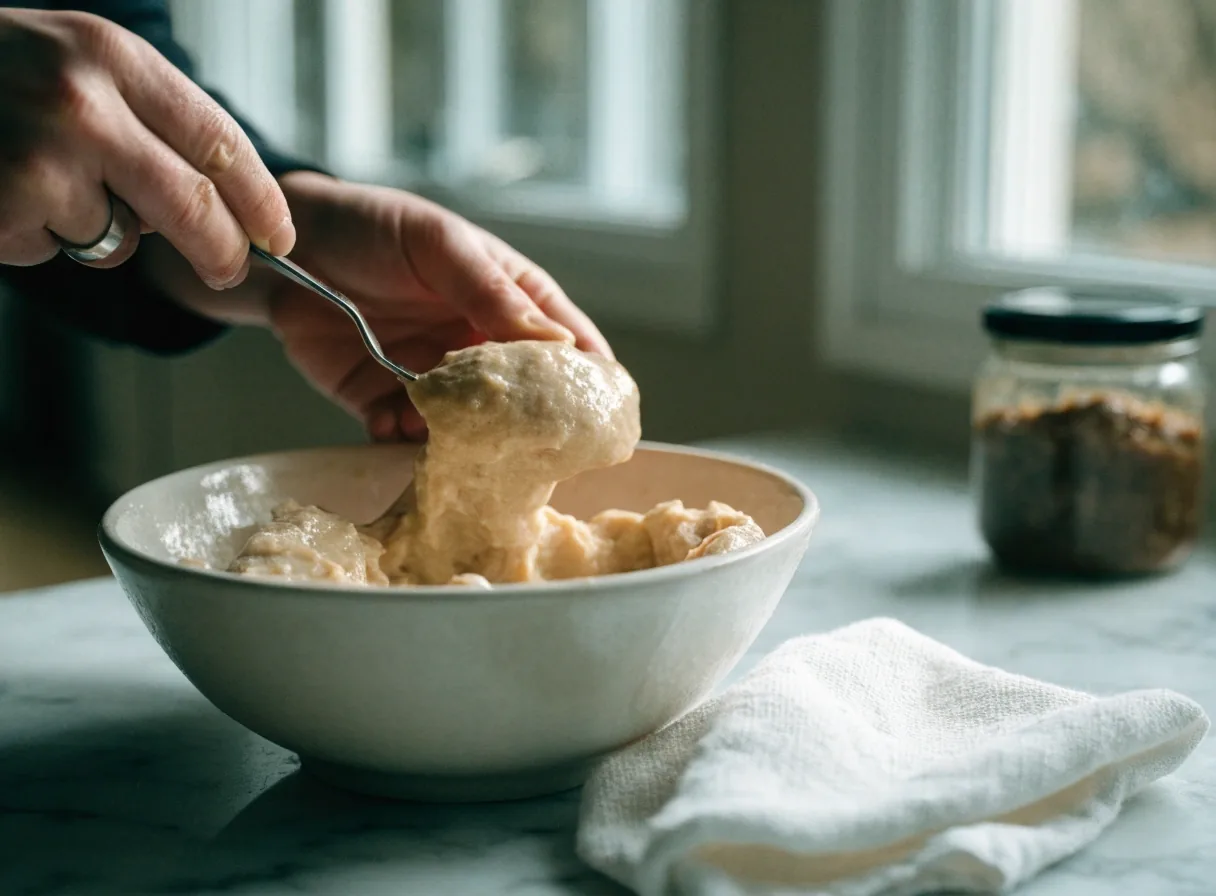
What the chapters cover
- Fermentation timelines
- Poolish and biga pre-ferments
- Sourdough starters
- Same-day vs cold-fermented dough
- Weights over volumes throughout
When dough misbehaves
The troubleshooting notes read like a checklist: dough that tears, dough that will not stretch, crust that stays pale. Each note names the likely cause and the fix for the next attempt, so a failed round is still useful.
The regional style chapters
The style chapters walk through Neapolitan, New York-style, Chicago, Detroit, Sicilian, New Haven, St. Louis, and Roman-style sheet pizza, among others. Each gets its own dough, pan, bake temperature, and topping approach.
The point is not to crown a winner but to show how the same ingredients produce a foldable slice in one case and a crisp, square-edged pie in another. Readers who like comparison cooking get a lot out of this section.
See also: the pizza styles guide for the side-by-side comparison.
Open the pizza styles guide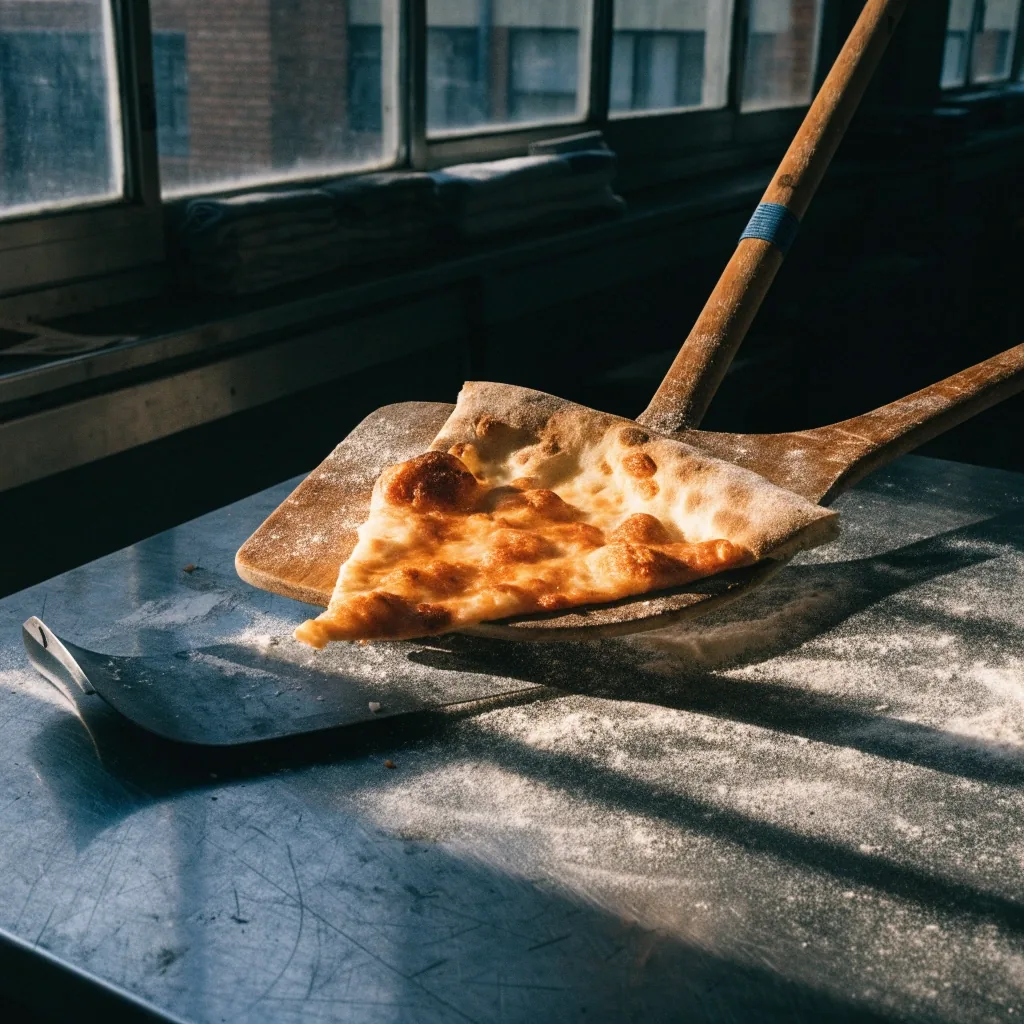
Recipes for weeknights and for weekends
The book splits its recipes by how much time you have. One half is built for a few hours; the other asks for an afternoon and a plan.
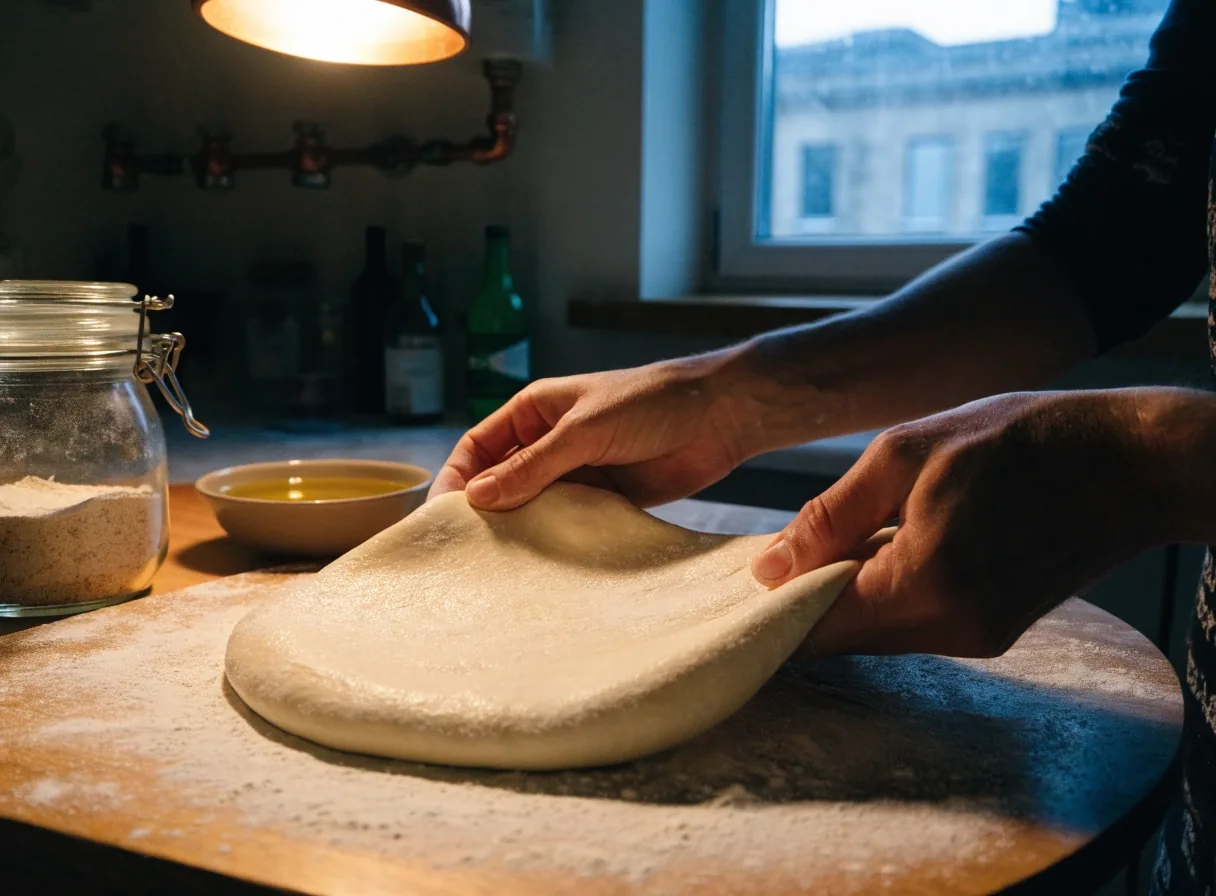
Recipes for weeknights
A good number of recipes are built for a few hours, not a few days. These use faster ferments and simple toppings, and they are written for someone cooking after work.
They are also the recipes most people start with, which is fine. Get one of these right, and the longer formulas become much less intimidating.
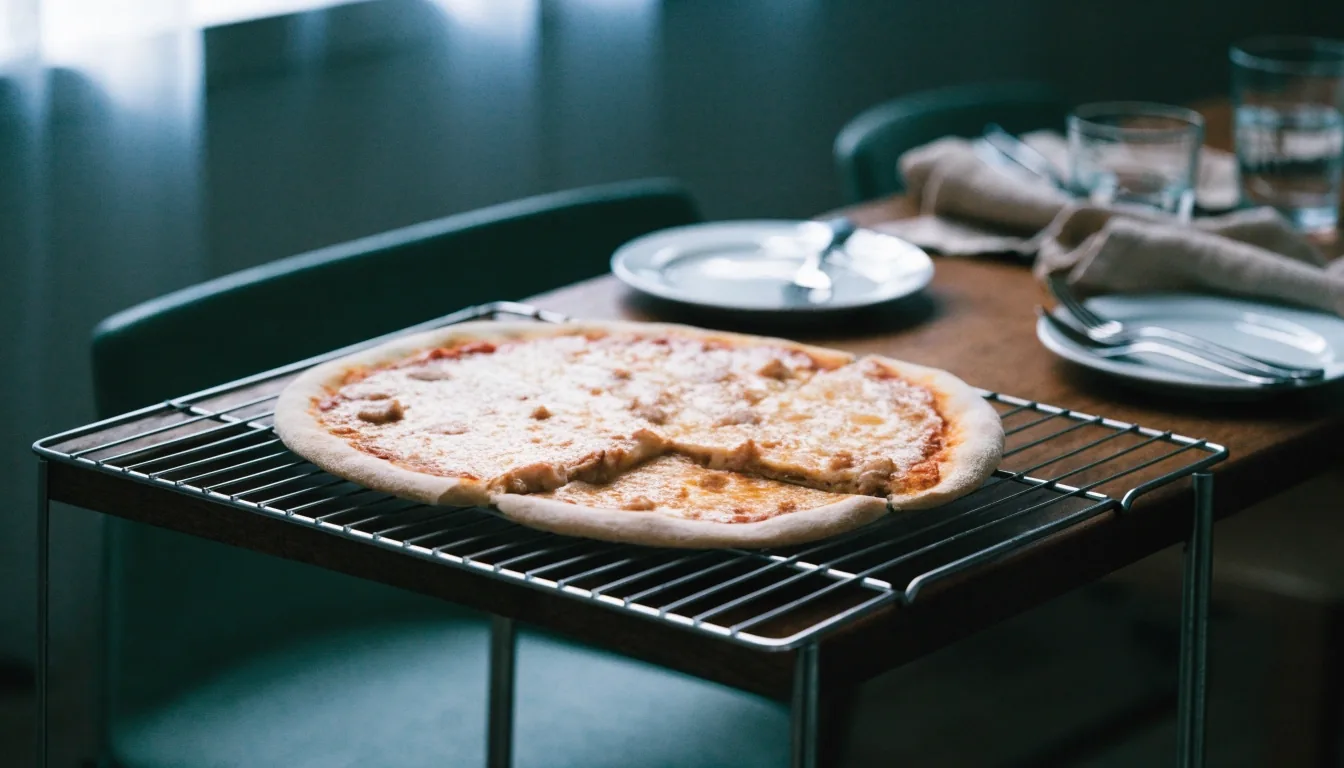
Recipes for weekends and guests
The longer projects are here too: multi-day cold ferments, sheet pizzas that feed a table, and a few ideas for finishing a meal with a sweet dough. These are the recipes to make when you have an afternoon and want the result to feel like an occasion.
They reward planning, and the book is clear about when to start the dough relative to when you plan to eat. If a cold ferment needs two days, the recipe says so before the ingredient list, not buried in a footnote.
See also: the recipe collection for the full list of what is in each chapter.
Who the book is written for
It is written for home bakers who want to understand dough, not just follow steps. That said, it does not assume professional training or expensive gear. If you own a scale, a mixing bowl, and an oven, you can cook from it.
Readers who already bake bread will find the fermentation chapters familiar and the style chapters a natural next step. If you are new to dough altogether, start with the weeknight recipes and work backward into the dough chapter as questions come up — the book is laid out so that this route works.
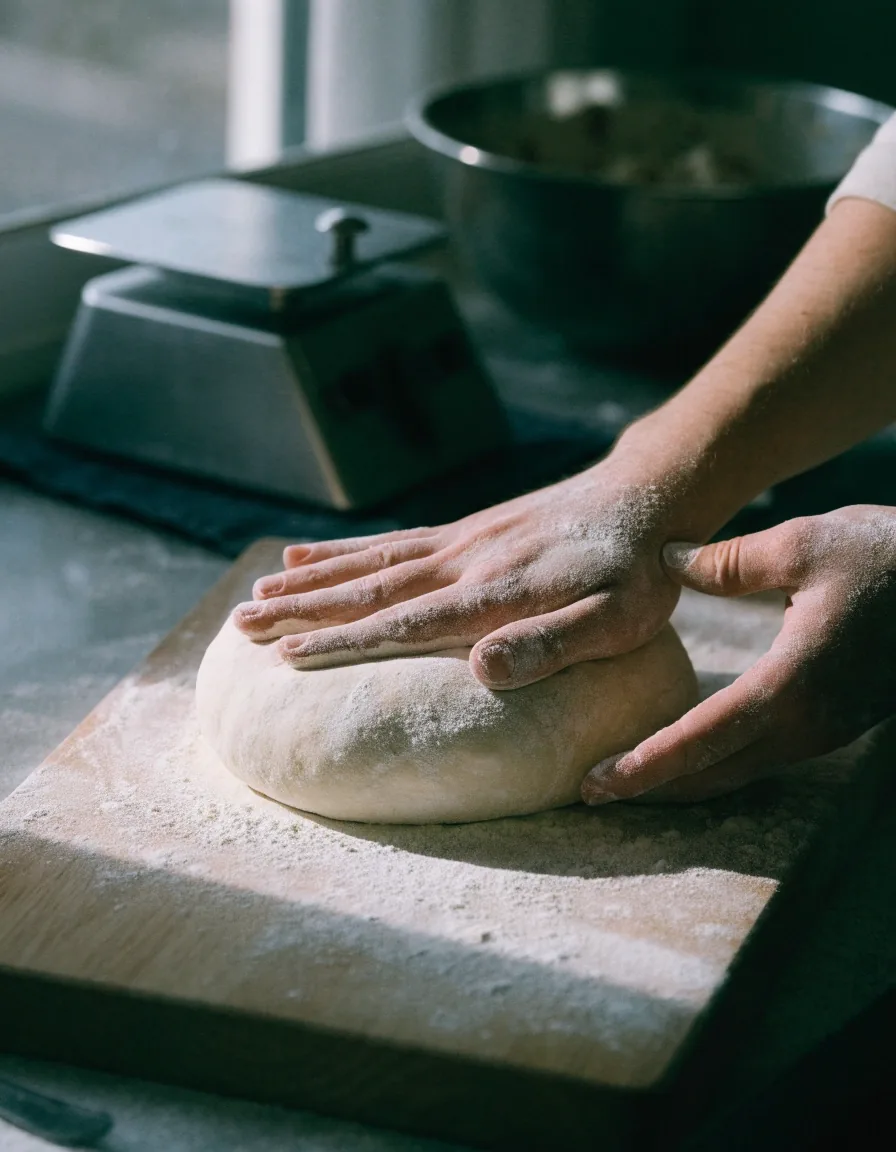
Where it fits among other pizza books
Several pizza books on the shelf are known for one strength each. Knowing what each one leans on helps you see what Dion's Pizza is aiming for.
The Pursuit of Pizza
Leans on championship pedigree, with nearly 50 recipes from 40 World Pizza Champions and QR video tutorials alongside them.
The Book of Pizza
Leans on baking-brand trust. The King Arthur Baking Company title published in 2026 highlights recipes such as Snaking Pizzas and a Margherita Pizza built on an 11-hour dough timeline.
Pizza Volume 01
Goes deep on a single craft, from Gozney, with 75-plus pizza recipes and 20 outdoor recipes from restaurant chefs.
Dion's Pizza
Aims at the middle: broad style coverage with the dough fundamentals spelled out, so you can move between a weeknight pie and a two-day cold ferment without learning a new method each time.
Format and how it is used
The book is a physical edition, printed for the kitchen counter rather than a screen. It is written to be cooked from, which means weights, clear timings, and notes on what to do when a dough misbehaves.
You can read it cover to cover, but most people use it by jumping to a style and working backward into the dough chapter. Both approaches work, and the cross-references in the margins point you back to the chapter you skipped.
Printed for the counter
A physical edition made to sit open beside a bowl, not a PDF you scroll with wet hands.
Read it two ways
Front to back for the dough teaching, or style-first with the margin cross-references leading you back.
See also: the recipe collection page for the full style list before you decide.
How to decide
If you want a single recipe, this is not that. If you want a set of dough skills that apply across a range of regional pizzas, it is.
Look at the recipe collection page for the style list, and the dough and baking basics page if you want to sample the teaching before you buy. If you would rather ask a person first, the contact page is the place — questions about the book, shipping, or which chapters to start with are all welcome.
Next steps
Browse the recipe collection Read dough and baking basics Ask about buying the bookQuestions by phone are welcome during business hours: +1-312-555-0483.
Questions people ask before buying
Do I need a pizza oven to cook from it?
No. The bake temperatures and timings assume a home oven with a stone or a steel, and the style chapters note where a dedicated oven changes the result. If you have one, the book tells you how to use it; if you do not, the recipes still work.
How much of the book is dough versus recipes?
The dough and equipment chapters come first and set the method for everything after. The regional style chapters are the largest block, and the closing recipes cover entertaining and using dough you already have. You can start anywhere, but the dough chapters are where the repeatability comes from.
Is it beginner-friendly, or for experienced bakers?
Both, if you are willing to weigh ingredients. Beginners tend to start with the weeknight recipes and use the troubleshooting notes as they go. Bread bakers will recognize the fermentation chapters and find the regional styles the natural next step.
Where can I ask a question before buying?
Use the contact page, or call +1-312-555-0483 during business hours. The office is at 1290 Dough Street, Chicago, IL 60607, and the phone line runs Monday to Friday, 9:00 AM to 6:00 PM and Saturday, 10:00 AM to 4:00 PM. Sunday the line is closed.